
Exeter Shoulder and Elbow Fellowship
Institution: Royal Devon and Exeter Hospital
Tenure: 12 months (August-August)
Aimed at: Peri CCT trainees
The fellowship in Exeter is well established and provides excellent clinical experience in all aspects of shoulder (60%) and elbow (40%) surgery. The fellow will gain operative experience in arthroscopic, arthroplasty, revision arthroplasty and trauma surgery of both the shoulder and elbow. The Royal Devon and Exeter hospital is the regional centre for elbow arthroplasty.
The fellow will work with all five shoulder and elbow surgeons at Exeter (Jeff Kitson, Chris Smith, Will Thomas, Jon Evans and Sabina Barbur). This post is fully funded and banded at registrar level with evening (one in four Mondays ) and weekend (one in twelve split) general trauma on-call commitment that does allow for additional pay and experience, but does not interfere with the day to day timetable of the fellow.
There are significant research opportunities available to the fellow, both in clinical and basic science. Jon Evans is appointed as a clinical lecturer at the University of Exeter, generating research in shoulder and elbow surgery. There are excellent links between the unit and the University of Exeter.
Timetable:
Monday: morning elective clinic. Shoulder & Elbow weekly MDT
Tuesday: all day elective theatre/ research day
Wednesday: all day elective theatre/ trauma theatre
Thursday: all day elective theatre / specialist fracture clinic
Friday: all day specialist trauma theatre
Comments from previous fellows:
The Exeter Shoulder & Elbow Fellowship affords excellent exposure to both trauma and elective shoulder & elbow surgery with a particular focus on shoulder & elbow arthroplasty and complex upper limb trauma. The Shoulder & Elbow team consultants are all excellent trainers and this year has been invaluable in preparing me for my future consultant practice. The volume and breadth of hands-on surgical experience over the year has been exceptional and the weekly MDT discussions have really helped shape my decision making for complex patients. It has been a pleasure to work with such a friendly, supportive, welcoming and cohesive team and I cannot recommend this fellowship highly enough to anyone preparing to take up a consultant post in Shoulder & Elbow Surgery - Thomas Key
This fellowship provides clinical and operative exposure to the majority of shoulder and elbow conditions. In addition to specialist work the fellow gets general trauma exposure, which is a big plus. All of the consultants bring complementary skill sets to the fellowship. In addition to learning new surgical techniques, the option is there for the fellow to develop shoulder ultrasound skills and to get involved in high quality research. The unit also benefits from having the regional multidirectional instability service and is supported by an outstanding physiotherapist from whom all fellows should learn to examine a shoulder. Highly recommended- Alun Yewlett
This well respected fellowship provides excellent operative and clinical training in a wide range of shoulder and elbow disorders. A good balance is achieved between open and arthroscopic work and there is considerable exposure to tertiary level work. All the consultants are extremely competent, friendly and are equally eager to train- Harpal Uppal
There are many aspects to becoming a consultant – I found this fellowship to set me on the path to fulfilling them all. Not only learning new techniques, honing aspects of well known procedures but also being treated as a colleague and its responsibilities. All this in a friendly and supportive environment. Thoroughly recommended – Dan Neen
This fellowship provides excellent operative exposure with the correct amount of supervision. The year fellowship made me prepared to take on a shoulder consultant post. I was also able to undertake several research projects resulting in presentations and publications – Tom Cosker
Fellows:
Henry Goodier (August 2026- August 2027)
Matthew Howard (August 2025-August 2026)
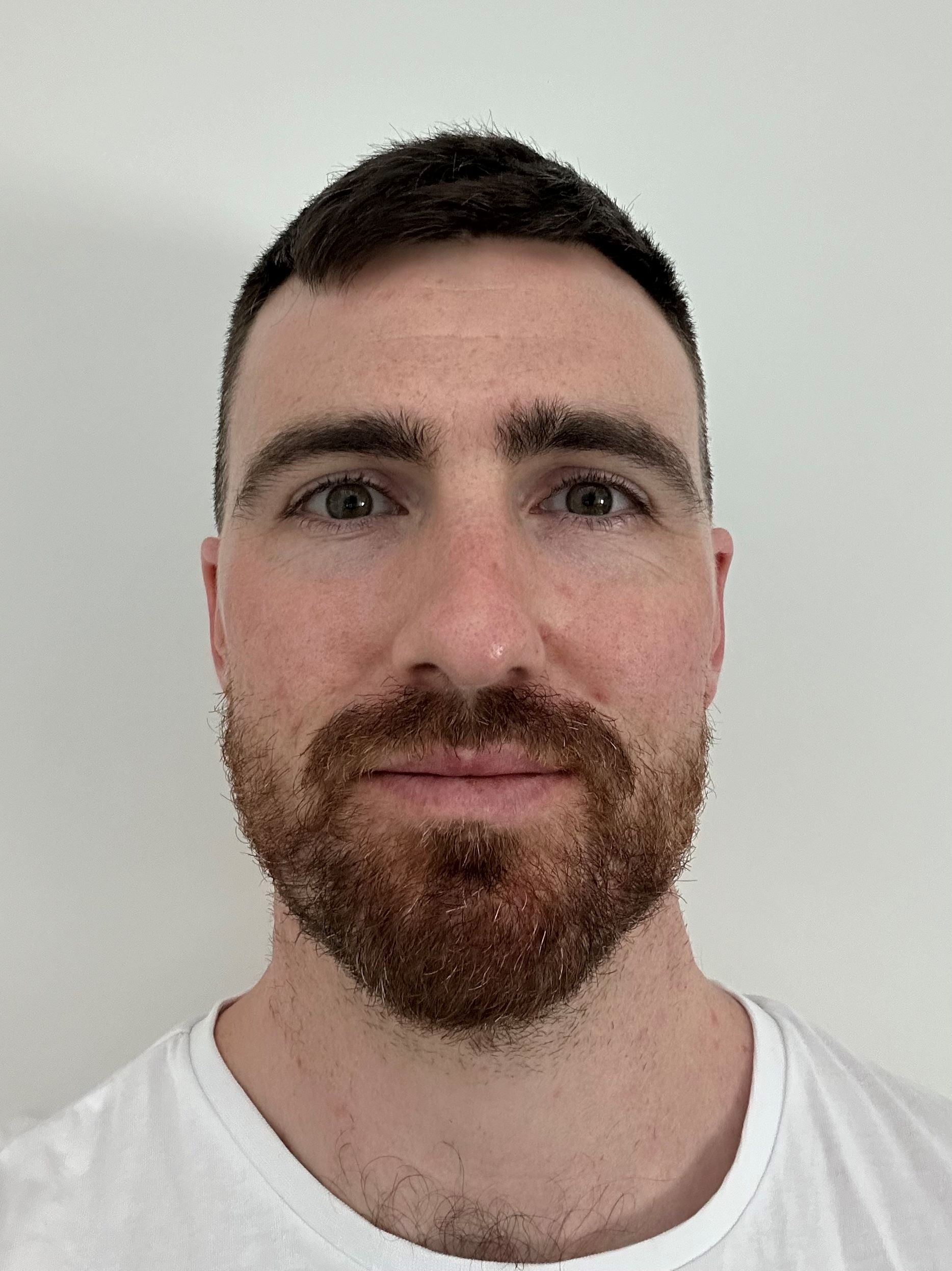
Simon Flower (August 2024- August 2025)

Thomas Key (August 2023-August 2024), Consultant Shoulder & Elbow surgeon, Royal Gwent hospital

Chris Jenkins (August 2022-August 2023), Consultant Shoulder & Elbow surgeon, Manchester

Jon Evans (August 2021-August 2022), Consultant Shoulder & Elbow surgeon, Royal Devon and Exeter hospital

Pradeep Kankanalu (March 2021-August 2021), Consultant Shoulder & Elbow surgeon, Northern General hospital, Sheffield

Alistair Jones (August 2020-March 2021), Consultant Shoulder & Elbow surgeon, Taunton hospital, Somerset

Richard Harding (August 2019-August 2020), Consultant Shoulder & Elbow surgeon, Morriston hospital, Swansea

James White (August 2018-August 2019), Consultant Shoulder & Elbow surgeon, Guys and St Thomas' hospital, London

Nick Furness (September 2017-August 2018), Orthopaedic Surgeon, Australia

James Beazley (August 2016-August 2017), Consultant upper limb surgeon, Royal Darwin hospital, Australia

Simon Booker (August 2015-August 2016), Consultant Shoulder and Elbow surgeon, Northern General hospital, Sheffield

Alun Yewlett (August 2014-August 2015), Consultant Shoulder and Elbow surgeon, united Lincolnshire hospitals
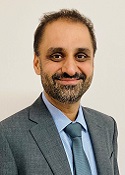
Harpal Uppal (March-August 2014), Consultant Upper limb surgeon, East and North Hertfordshire NHS trust

Paul Guyver (Jan-March 2014), Consultant Shoulder and Elbow surgeon, Derriford hospital, Plymouth

Dan Neen (Aug 2013-Jan 2014), Consultant, Dartford and Gravesham NHS trust

Chet Modi (April-July 2013), Consultant Shoulder and Elbow surgeon, UHCW, Coventry

Paul Verbeek (August 2012-January 2013), Consultant, Franciscus hospital, Roosendaal, Netherlands

Tom Cosker (August 2011-July 2012), Consultant and Director of Human Anatomy, Oxford University
For more information please contact Chris Smith through any of his secretaries on the contact page.
Upcoming courses from the Exeter team
10–12 June 2026
We are pleased to invite you to the South West Cadaveric Upper Limb Course 2026. Following exceptional feedback over recent years, the course has been expanded to include an additional day, enhancing both the depth and quality of teaching delivered.
Our aim has always been to maximise delegates’ time in the cadaveric laboratory. Previously, this was limited by time pressures. The addition of a third day represents a significant improvement, allowing increased hands-on dissection alongside dedicated classroom-based, case-focused discussion led by an experienced faculty.
Days 1 and 2 focus on Hand, Wrist and Peripheral Nerve Surgery, while Days 2 and 3 cover the Shoulder Girdle, Humerus and Elbow.
There is a crossover on Day 2, during which both courses run simultaneously. Attendance across all three days is possible; however, this would require either missing the afternoon hand and wrist classroom session or some laboratory time during the shoulder and elbow course. Delegates interested in attending all three days are encouraged to contact us for further information.
Hand, Wrist and Peripheral Nerve
Days 1 & 2
This course is aimed at junior consultants, hand surgery fellows, and senior orthopaedic or plastic surgery trainees aspiring to a career in hand surgery.
Day 1 consists of intensive cadaveric laboratory teaching, followed by a course dinner attended by delegates and faculty.
On Day 2, delegates return to the laboratory until midday before moving to the lecture theatre for case-based discussions designed to consolidate learning. Faculty will present challenging cases, providing practical insights applicable to future clinical practice. Demonstrations will include the use of custom osteotomy guides, management of interosseous membrane injury and reconstruction, complex trauma, and nerve reconstruction techniques.
Shoulder and Elbow
Days 2 & 3
This course is aimed at senior orthopaedic trainees and fellows seeking to develop a thorough understanding of upper limb surgical approaches and the management of shoulder and elbow pathology.
Day 2 begins in the lecture theatre, covering the theoretical basis of relevant surgical approaches, before progressing to the cadaveric laboratory after lunch. A course dinner for delegates and faculty follows at the end of the day.
Day 3 consists of a full day of cadaveric laboratory teaching.
Day 1 & 2 – Hand, Wrist and Peripheral Nerve
Faculty
• Mr Oliver Stone – Consultant Orthopaedic Hand Surgeon, Exeter
• Miss Nicola Fine – Consultant Orthopaedic Hand Surgeon, Exeter
• Miss Sabina Barbur – Consultant Orthopaedic Upper Limb Surgeon, Exeter
• Mr Dominic Power – Consultant Peripheral Nerve Surgeon, Birmingham
• Miss Paulina Witt – Consultant Plastic Hand Surgeon, Exeter
• Mr Patrick Gillespie – Consultant Plastic Hand Surgeon, Exeter
• Mr John Hardman – Consultant Orthopaedic Hand Surgeon, Torbay/Exeter
• Mr Matthew Chan – Consultant Orthopaedic Hand Surgeon, Torbay/Exeter
• Mr Anthony Gough – Consultant Orthopaedic Hand Surgeon, Taunton
Course Aim
This two-day course is designed for junior consultants, current hand surgery fellows, and senior trainees planning a career in hand surgery. Delegates will explore less common and more complex nerve decompressions and learn the principles of nerve repair, nerve grafting, and tendon transfer surgery.
Participants will also gain experience with dorsal approaches to the wrist and the management of wrist arthritis. Sessions on base of thumb arthritis will include thumb CMC denervation as well as trapeziectomy and suspensionplasty. Instruction will be provided on silastic MCPJ and PIPJ arthroplasty, along with techniques for soft tissue coverage using local hand flaps.
The course concludes with a faculty-supervised surgical simulation challenge, in which delegates will be presented with a problem-solving task using the available instrumentation. A course dinner and classroom-based complex case discussions are included.
Course Content
• Posterior interosseous nerve decompression
• Wrist denervation
• EIP to EPL tendon transfer
• Lacertus syndrome
• Guyon’s canal release
• Nerve repair, nerve wrapping (Axoguard), and nerve allograft (Axogen)
• Dorsal wrist approach
• Scaphoidectomy and four-corner fusion / proximal row carpectomy
• Thumb CMC denervation
• Trapeziectomy and suspensionplasty
• Thumb UCL repair
• MCPJ and PIPJ silastic joint replacement
• Common finger flaps
• Mystery simulation session
Day 2 & 3 – Shoulder Girdle, Humerus and Elbow
Faculty
• Mr William Thomas – Consultant Orthopaedic Upper Limb Surgeon, Exeter
• Mr Christopher Smith – Consultant Orthopaedic Upper Limb Surgeon, Exeter
• Mr Jonathan Evans – Consultant Orthopaedic Upper Limb Surgeon, Exeter
• Miss Sabina Barbur – Consultant Orthopaedic Upper Limb Surgeon, Exeter
• Mr Matt Howard – Shoulder and Elbow Fellow, Exeter
Course Aim
Day 2 provides an opportunity for surgeons operating on the shoulder girdle and elbow to explore surgical anatomy and identify structures at risk in both elective and trauma surgery. With two delegates per cadaver, participants will have ample time to practise a wide range of approaches under the supervision of experienced faculty.
By the end of the course, delegates will have a comprehensive understanding of available surgical approaches and the rationale underpinning approach selection.
Course Content
• Clavicle approach: mid-shaft osteotomy, neurovascular identification, clavicle plating and Acusinch
• Deltopectoral approach (“The Exeter Way”): quadrilateral space dissection, distal clavicle osteotomy, anterior glenoid bone block, coracoid osteotomy, neurovascular identification, latissimus dorsi transfer
• Anterolateral approach: musculocutaneous and radial nerve identification
• Posterior approach: posterior scapular plating
• Lateral elbow approach: capitellar shear fractures, radial head arthroplasty, LUCL management
• Medial elbow approach: coronoid plating
• Posterior elbow approach: ulnar and radial nerve identification, triceps-on distal humeral plating, olecranon osteotomy and fixation
• Anterior elbow approach: neurovascular identification
Course Fees and Application
The course fee is £400 per delegate per two-day course, which includes lunch and the course dinner.
To apply, please email
• which course you wish to attend, and whether you will attend the evening meal.
Places are allocated on a first-come, first-served basis and are limited to 22 delegates per day.
Course Venue
Vesalius Clinical Training Centre
University of Bristol
Beacon House
Queens Road
Bristol
BS8 1U
Dinner Venue
The Coconut Tree
Clifton Triangle
2 Byron Place
Bristol
BS8 1JT